Was that a bad week, or are you actually slipping?
Most habit trackers answer with one number. One number cannot tell the difference.
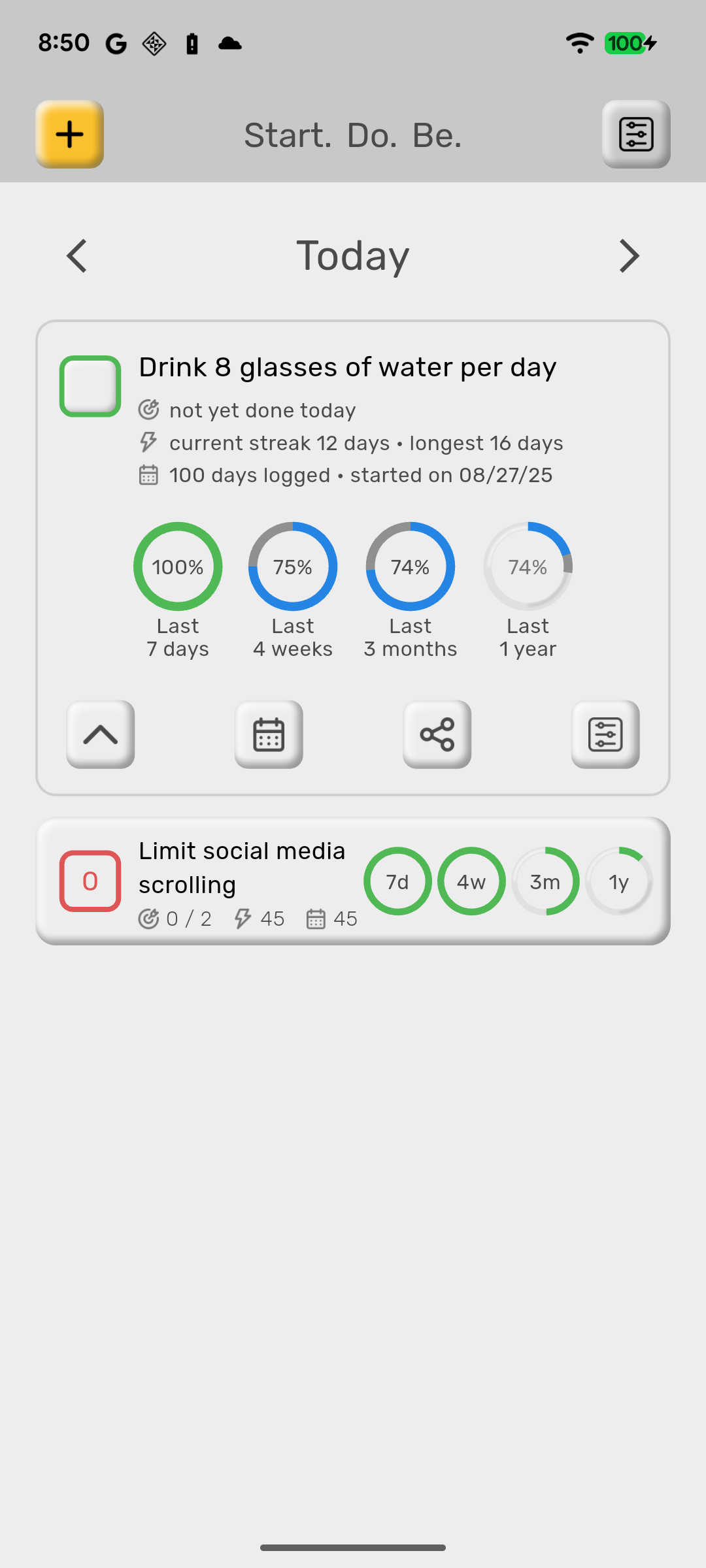
StartDoBe shows your completion rate over several spans of time at once. When the short span drops and the long ones hold, you had a bad week. When they all drift down together, that is something else, and you can see it while it is still early.
There is a second problem underneath that one. Most trackers count calendar days, so they test you on days that asked nothing of you, and they score a day you were never tempted as a win. Count the times something was actually on the line and the number starts to mean what it says.
Four time spans, side by side
Logbook
What most trackers lead with
What StartDoBe leads with
Example figures. Completion rates describe what you logged, nothing more.
This is a rough week sitting on top of a solid year. The 7-day number dropped, the 3-month and 1-year numbers barely moved. Nothing here needs rescuing.
A real decline looks different. The longer spans come down too, and they come down before you would have noticed on your own. That comparison is the whole point, and it is why all four sit on the card at the same time instead of one tap away.
Sam, our chatbot, can help you get started
The first step is often the hardest: putting into words what you want to change. That part is Sam's job. A short conversation, then a few ways you could set the habit up. You pick the one you think you would stick with.
We do not keep the conversation. It stays in this tab, and closing the tab loses it. To write each reply we send what you type to OpenAI, and we keep a one-word label for the subject, like sleep or smoking. See the privacy policy.
Why the longest span can be trusted
A one-year completion rate is only worth reading if the app remembers what you were aiming for along the way. Almost nobody holds a single goal for a year. You start where you can start, and you raise it.
StartDoBe keeps the goal that was in force at the time. Move from three times a week to five and the earlier weeks are still scored against three, because three is what you were doing. The year stays a real number instead of quietly turning into a comparison against a goal you had not set yet.
Changing the rhythm will work the same way.in build Start once a week, move to five times a week, then daily, and everything you logged on the way up still counts for what it was.
Anything marked in build is not in the app yet.
The rest of it
-
Your data stays on your phone
No account, no sign-in, no sync. Habits are stored on the device and are not uploaded.
-
Count the times it was on the line in build
Some habits do not come up every day. Score those against the chances you actually got, so a quiet week does not read as a good one.
-
Track a limit, not just a target
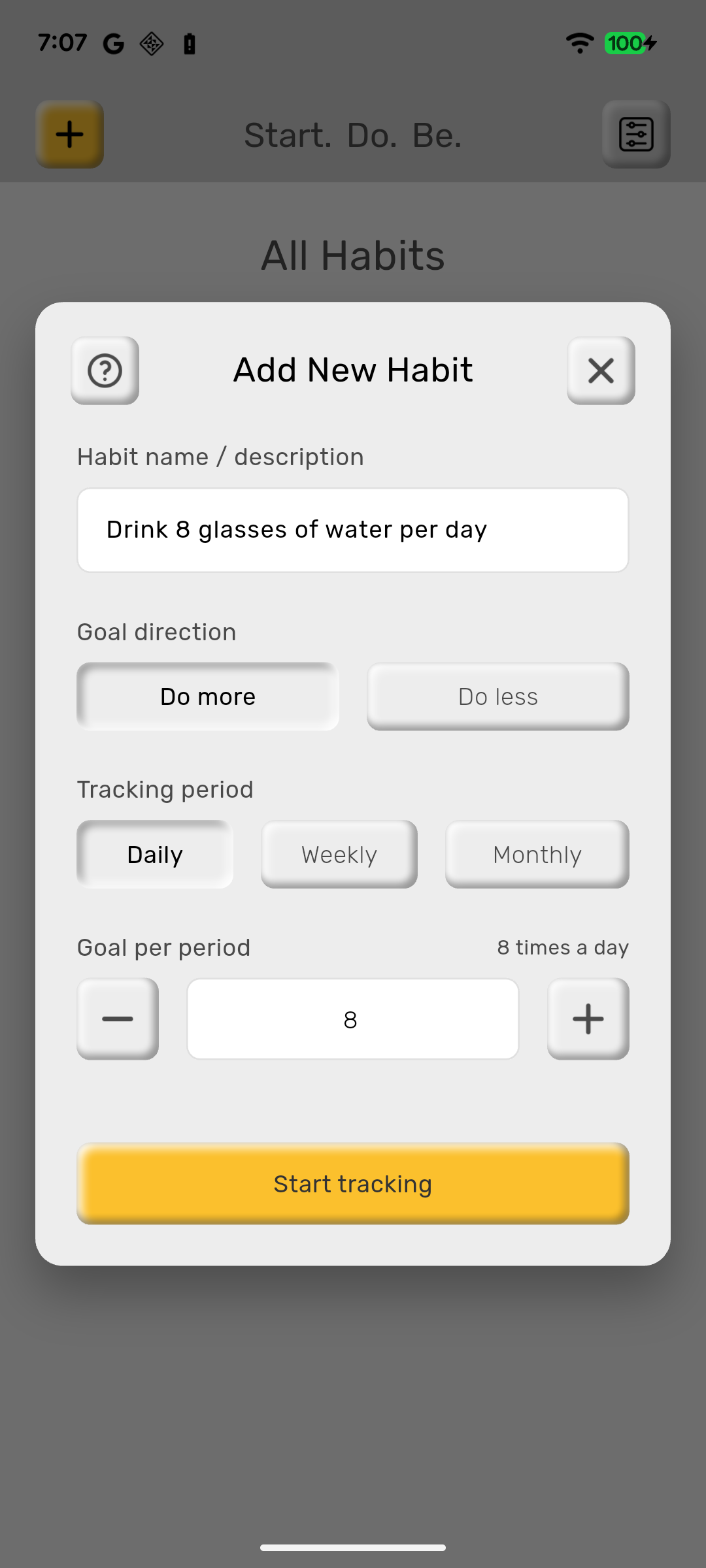
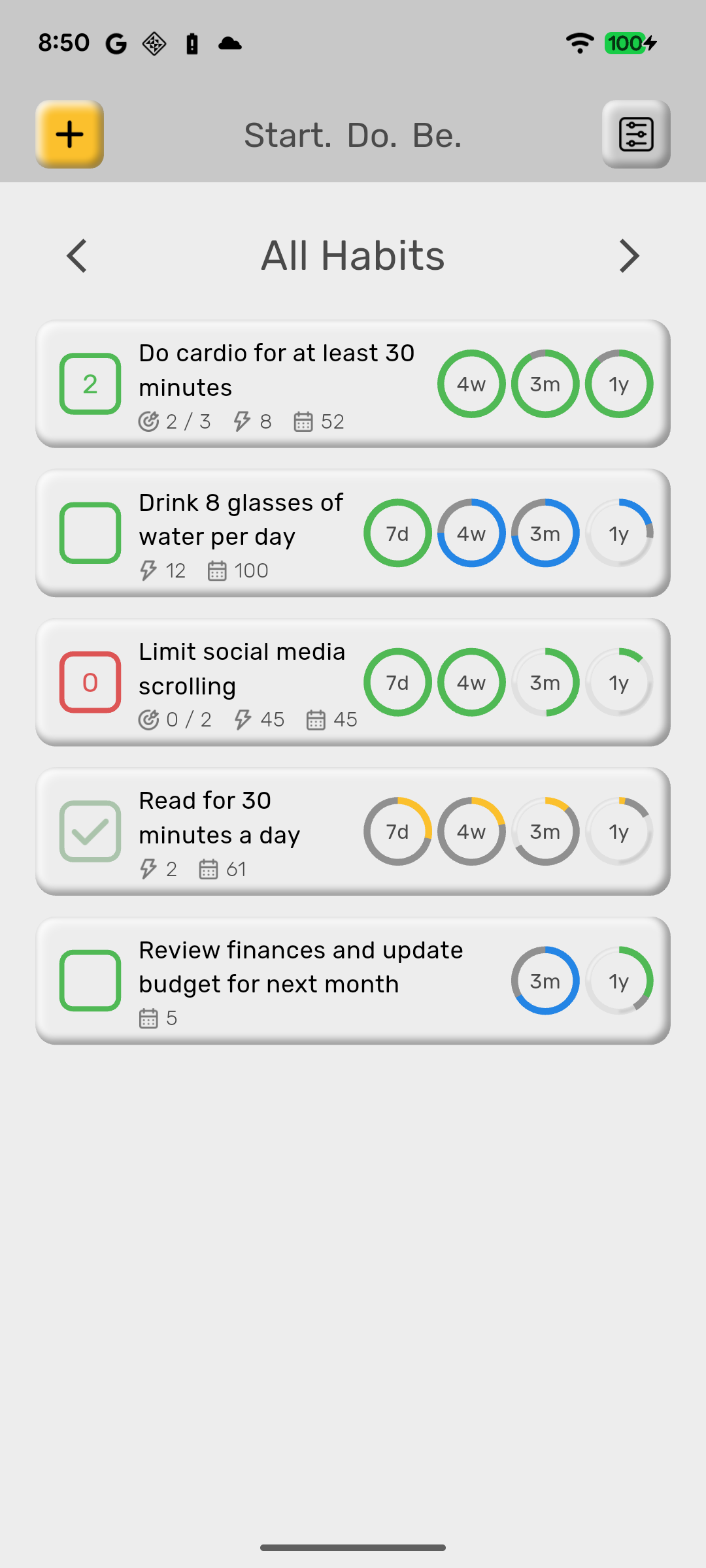
Set a habit to do more of something, or to stay under a cap you choose. Both use the same spans and the same card.
-
Set it up by talking it through in build
Describe what you want to change in your own words and get a habit set up from it, rather than filling in a form and guessing at the settings.
-
Travel without breaking the count
Time zones, daylight saving and months of different lengths are handled, so crossing a date line does not cost you a day.
-
Fix a day you forgot to mark
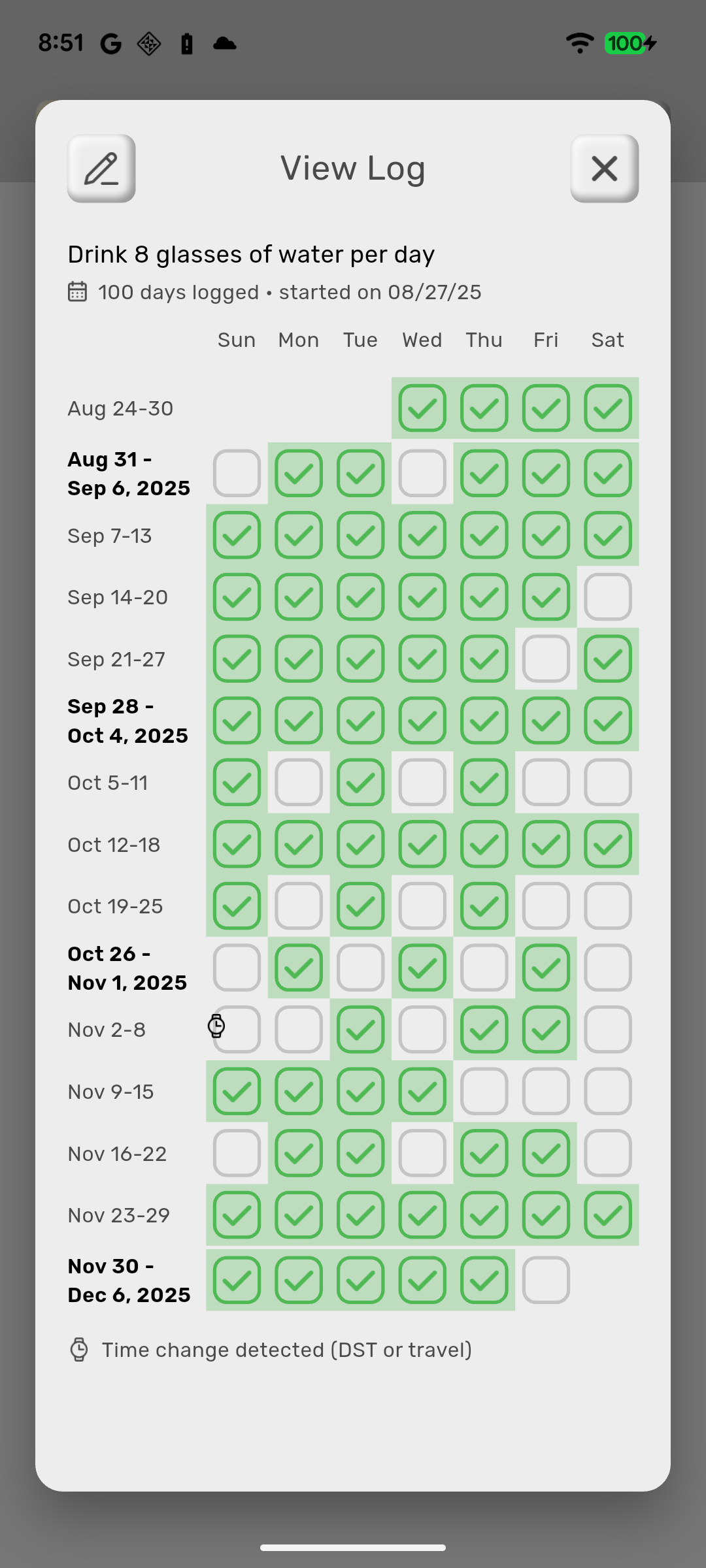
The calendar is editable. A missed tap is not the same as a missed day, and you should not be stuck with the wrong record.
What it looks like
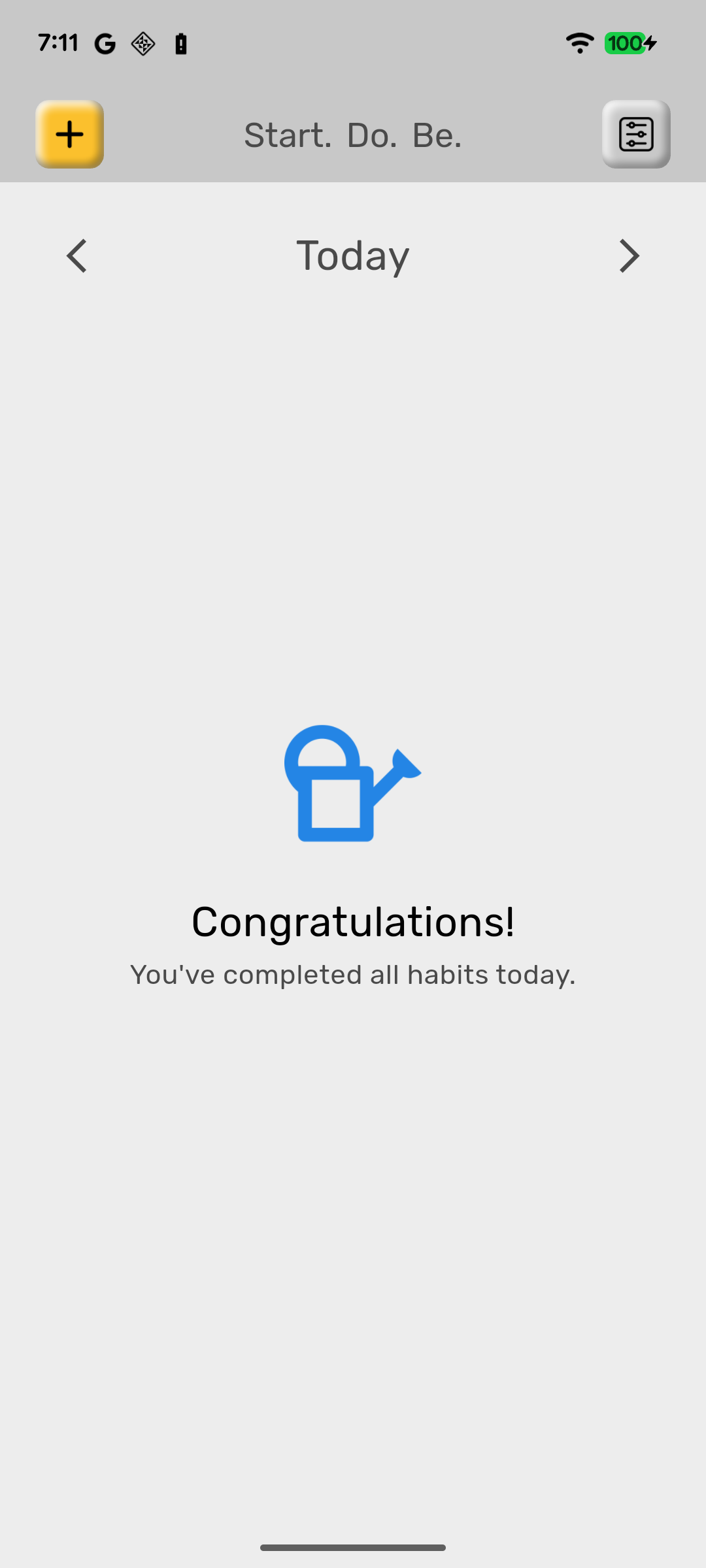
Join the tester list
free while in beta
StartDoBe is not on general release yet. iPhone testers get a TestFlight invite by email right away. Android runs as a testing track and testers are added by hand, so Android invites go out in small batches.
Testers get a special deal at launch.
Leave your email to get an invite.